 English




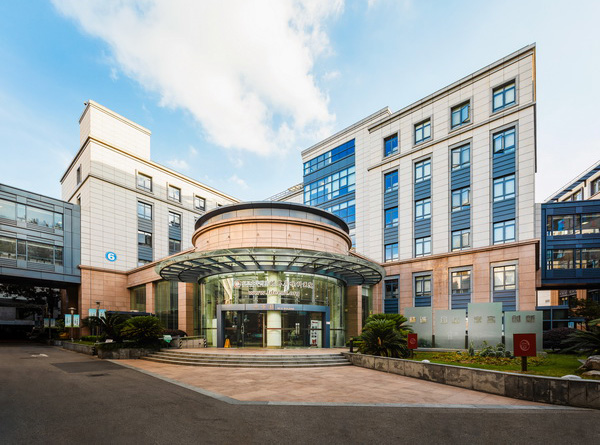
Renji Hospital, founded in 1844, is the first Western medicine hospital in Shanghai after the city's opening as a treaty port. The hospital currently consists of four campuses (East, West, South, and North) and the Shanghai Cancer Institute. It is a comprehensive tertiary Grade A hospital with a complete range of disciplines, integrating medical care, teaching, and research. The hospital has been awarded the title of National Civilized Unit for four consecutive terms and has received an A rating in the annual performance assessment of presidents by the Shanghai Shenkang Hospital Development Center for 18 consecutive years. The East Campus is located in the Lujiazui Financial and Trade Zone in Pudong and was completed and put into use in October 1999; the West Campus is located in the Central Business District of Huangpu District, adjacent to the Bund; the South Campus is located in Pujiang Town, Minhang District, completed and put into use in December 2012, and was fully incorporated into Renji Hospital on October 20, 2020; the North Campus is located at Juye Road and Lingshan Road and was fully opened in July 2013; the Shanghai Cancer Institute was officially integrated with Renji Hospital in October 2010 under the "Institute-Hospital Integration" model, completed its overall transfer of affiliation in 2019, and is currently entrusted by the Shanghai Municipal Education Commission to the management of Shanghai Jiao Tong University School of Medicine, with specific affairs managed by Renji Hospital. The Shanghai Cancer Institute currently has three campuses in Xuhui, Pudong, and Minhang, with a total experimental space of 26,820 m². It has scientific research public service platforms, the editorial department of the journal *Tumor*, and other research auxiliary departments, and possesses 27 P teams and 14 young PI teams. As of the end of 2025, the hospital had a total of 4,886 permanent staff, including 776 experts with senior and associate senior professional titles; 201 doctoral supervisors and 200 master's supervisors. The four campuses (East, West, South, and North) have a total of 2,750 approved beds and 54 clinical and medical technology departments. In 2025, the hospital completed 7,458,400 outpatient and emergency visits, 268,200 discharges, 134,000 inpatient surgeries, with an average length of stay of 4.79 days. The hospital possesses advanced medical equipment including dual-source photon-counting CT, positron emission tomography-computed tomography (PET-CT), positron emission tomography-magnetic resonance imaging (PET-MR), endoscopic surgical instrument control system (da Vinci surgical robot), X-ray stereotactic radiotherapy system, helical tomotherapy system (Tomo Therapy), linear accelerator (LA), 320-detector 640-slice ultra-fast spiral CT, hybrid operating room system, and telemedicine teaching system. The hospital has 13 National Key Clinical Specialties (Gastroenterology, Gastroenterology Key Laboratory, Obstetrics, Cardiology, Neurosurgery, General Surgery, Urology, Nephrology, Imaging Medicine, Rheumatology, Allergy, Transplantation, Critical Care Medicine), 1 national and provincial major disease multidisciplinary collaborative diagnosis and treatment capacity building project (pediatric and adult end-stage liver disease), 3 central transfer payment medical service and support capacity improvement projects (major and intractable diseases integrated Chinese and Western medicine collaboration construction: Nephrology, Urology; medical and health institution capacity building: Critical Maternal Consultation and Rescue Center), 1 National Administration of Traditional Chinese Medicine integrated Chinese and Western medicine "Flagship" department (Nephrology), 2 National Administration of Traditional Chinese Medicine major and intractable diseases integrated Chinese and Western medicine clinical collaboration projects (Nephrology, Rheumatology), National Drug Clinical Trial Institution, State Key Laboratory (National Key Laboratory of Tumor System Medicine), Ministry of Education Key Laboratory (Key Laboratory of Anesthesiology), Ministry of Health Key Laboratory (Key Laboratory of Internal Medicine Gastroenterology), National Administration of Traditional Chinese Medicine Traditional Chinese Medicine Research Laboratory (Level III) (Molecular Cell (Nephrology) Laboratory, Acupuncture Anesthesia Effect Laboratory). In recent years, the hospital has maintained a high level of approved research and talent projects, including National Natural Science Foundation of China (Excellent Research Group, Innovative Research Group, Major, Key, etc.) projects, Ministry of Science and Technology National Key R&D Program key projects, 973 Chief Scientists, Changjiang Distinguished Professors, Ministry of Health Young and Middle-aged Experts with Outstanding Contributions, National Health Commission Outstanding Physicians, etc. During the "14th Five-Year Plan" period, a cumulative total of 835 national-level projects were obtained, including 779 NSFC projects, with 64 new national-level talents and 272 provincial and ministerial-level talents. With its outstanding contributions and innovative breakthroughs in the medical field, the hospital has won multiple National Science and Technology Progress Awards, Chinese Medical Science and Technology Awards, Higher Education Science and Technology Progress Awards, etc. The hospital focuses on building an excellent physician training system, currently offering 34 doctoral programs and 41 master's programs. The total area of the hospital's teaching buildings is 6,508 square meters. In 2014, the Shanghai-Ottawa Joint Medical College was established, which is the first Sino-foreign cooperative education program officially approved by the Ministry of Education in China. In 2018, it was awarded the first batch of National Clinical Teaching and Training Demonstration Centers; in 2019, the Sino-French College of Surgery was established; in 2019, it passed the Ministry of Education clinical medicine undergraduate professional certification. In recent years, it has been awarded the first batch of China Laparoscopic Surgery Training Bases, the first batch of National First-Class Undergraduate Courses, Ministry of Education Curriculum Ideological and Political Demonstration Courses, and the second batch of National First-Class Undergraduate Courses, etc. In 2010, the hospital became one of the first batch of Shanghai Resident Standardized Training Bases; in 2013, it became one of the first batch of Shanghai Specialist Standardized Training Professional Bases; in 2014, it became one of the first batch of National Resident Standardized Training Bases. Currently, there are 19 national-level resident standardized training professional bases, including 4 key professional bases; 6 national-level specialist standardized training professional bases, and 22 Shanghai specialist standardized training professional bases. The Simulation Training Center was established in 2003, awarded the title of "National Clinical Skills Center" in 2013, and officially inaugurated in 2018, with a total area of 2,300 m². The training center integrates structured, multi-functional, modern, and humanistic features, and is an educational platform with core functions of medical simulation education, clinical skills training, professional competency assessment, medical simulation professional research, and project equipment development. In recent years, the hospital has steadily promoted the construction of compact medical alliances, leveraging the core leading and driving role of tertiary hospitals. Within Shanghai, it has successively managed Jiading District Central Hospital (Renji Hospital Jiading Hospital), Baoshan District Dachang Hospital (Renji Hospital Baoshan Branch), Minhang District Pujiang Hospital (Renji Hospital Minhang Branch), and Pudong New Area Punan Hospital (Renji Hospital Punan Branch). In active response to national strategies such as the integrated high-quality development of the Yangtze River Delta, it fully manages Ningbo Hangzhou Bay New Area Hospital (Renji Hospital Ningbo Hospital) and the new campus of Nantong First People's Hospital (Renji Hospital Nantong Hospital), co-builds the "National Regional Medical Center for Digestive System Diseases" (Renji Hospital Anhui Hospital) with Anhui Second People's Hospital, and cooperates with the Sanya Municipal People's Government to co-build Sanya Yazhou Bay Science and Technology City Hospital (Renji Hospital Sanya Hospital). The hospital has always adhered to its original aspiration of public welfare and actively fulfills its social responsibilities. It has sent personnel multiple times to Tibet, Xinjiang, Yunnan, Morocco, and Laos to carry out paired assistance work; it has dispatched medical teams or served as designated hospitals to provide medical security for municipal-level conferences and important major events such as previous China International Import Expos. Renji Hospital will continue to uphold the spirit of its motto "Benevolent Art, Saving the World," adhere to the service tenet of "Patients First, Quality Foremost," and strive to build itself into a high-level modern research-oriented hospital that is innovation-led, intelligence-empowered, open and integrated, and culturally inherited. Renji Hospital East Campus is located in the Lujiazui Financial and Trade Zone in Pudong, completed and put into use in October 1999, currently covering an area of 86,875 square meters, with a building area of 293,413.56 square meters. Renji Hospital settled in Pudong in 1999. As the only tertiary Grade A hospital in Pudong New Area at that time, it made tremendous contributions to providing residents of Pudong and surrounding areas with access to high-quality medical service resources. In recent years, the number of patients visiting the hospital has risen rapidly. In 2023, the East Campus of Renji Hospital had 2.03 million outpatient and emergency visits and 132,300 discharges. Patients are no longer limited to Shanghai Pudong; many domestic and even international patients come attracted by its reputation. The outstanding medical team at Renji Hospital East Campus, with its exquisite medical skills and thoughtful service, provides comprehensive and professional medical security for the general public. In order to gradually meet the growing demand for medical services from the general public, the Surgical Building of Renji Hospital East Campus was completed and put into use in 2005; the