Department Details
In 1999, Professor Hang Yannan, then Director of the Department of Anesthesiology at Renji Hospital, established the Surgical Intensive Care Unit (SICU). After fifteen years of development, the discipline made significant progress in clinical practice, education, research, and disciplinary construction, and in 2014, the Department of Critical Care Medicine was officially established. Today, the Department of Critical Care Medicine at Renji Hospital has developed into a first-tier clinical diagnostic and therapeutic discipline with distinctive characteristics, a well-structured talent echelon, and comprehensive development in clinical practice, education, and research.
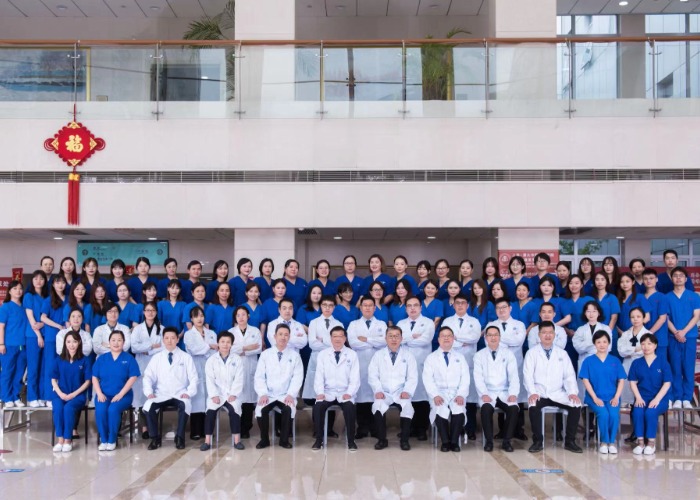
The department currently has 39 full-time physicians, including 19 with doctoral degrees, 11 with senior professional titles, 2 doctoral supervisors, and 2 master's supervisors. At present, the department has established a multidisciplinary collaborative diagnosis and treatment team that includes respiratory therapists and rehabilitation therapists, with its scope of work covering four campuses of Renji Hospital: East, West, South, and Hangzhou Bay. In February 2024, with the completion of the Discipline Building at Renji Hospital East Campus, the ICU Center of the Department of Critical Care Medicine, planned with 102 beds, was officially completed and put into operation.
As the core platform for the treatment of critically ill patients at Renji Hospital, the department has developed a sub-specialty layout centered on "sepsis diagnosis and treatment and multi-organ function support," carrying out in-depth work and achieving positive results in sub-specialties including "sepsis and severe infection," "ARDS and respiratory failure," "organ function protection and support," and "critically ill maternal rescue." The department admits over 4,000 critically ill patients of various types annually. Through the standardized application of bedside ultrasound and electrical impedance tomography (EIT)-guided titration of mechanical ventilation, prone positioning ventilation, extracorporeal membrane oxygenation (ECMO), continuous blood purification (CBP), and other important organ function support technologies, the success rate for sepsis treatment reaches as high as 85%, achieving a world-class level. As an important platform for perioperative management of patients with severe liver disease, the department has implemented comprehensive perioperative treatment strategies based on artificial liver technology, with 70% of patients successfully undergoing liver transplantation and a liver transplantation success rate of over 80% for patients with severe hepatic insufficiency. As one of the critical maternal rescue centers in Shanghai, the department admits 40% of Shanghai's critically ill pregnant and postpartum women annually, with a rescue success rate of 99.5%, making outstanding contributions to improving the success rate of critical maternal rescue and reducing maternal mortality in the city. It has successively received honors including the Shanghai Advanced Collective in the Fight against COVID-19 and the Shanghai Advanced Grassroots Party Organization.
The department emphasizes the cultivation and development of its talent echelon. Over the years, it has continuously undertaken theoretical teaching and clinical supervision for undergraduate and graduate students in clinical medicine from Shanghai Jiao Tong University School of Medicine and the Sino-Canadian Ottawa Joint School of Medicine for required and elective courses including "General Surgery," "Critical Care Medicine," and "Critical Hemodynamic Management and Organ Function Support." Faculty members have participated in compiling national-level textbooks including the fourth round of standardized textbooks for anesthesiology programs in national higher education institutions, "Critical Care Medicine," and "National Advanced Health Professional Technical Qualification Examination Guide — Critical Care Medicine." National-level continuing education courses are regularly conducted; over thirty graduate students have been trained, with some receiving honors such as Outstanding Graduate of Shanghai Jiao Tong University. In 2018, the department became a national-level Critical Care Medicine specialty training base, and in 2020, it became a national-level Critical Care Medicine residency standardized training base, currently with 6 specialty training supervisors and 10 residency training supervisors. Multiple members of the department have received funding from talent programs including the "Shanghai Outstanding Young Medical Talent Training Funding Program," the "Pujiang Program," and the "Shanghai Science and Technology Rising Star (Yangfan Special Project)."
In terms of scientific research, the department has long been committed to research in directions including sepsis and ARDS, pulmonary fibrosis, organ function protection and support, and severe infection. In recent years, it has presided over a cumulative total of 12 National Natural Science Foundation of China projects and 18 provincial, municipal, and local key research projects, having established a systematic and mature research framework and produced positive research outcomes. In recent years, department members have published over 60 SCI papers as first/corresponding authors, obtained over ten authorized national invention or utility model patents, and participated in the compilation of nearly 10 clinical expert consensus documents. Some research findings have been published in international top-tier journals including N Engl J Med, Lancet Infect Dis, Intensive Care Med, Am J Respir Crit Care Med, and Critical Care, and have been highlighted as cover papers with editorial commentary in the American journal Lab Invest, demonstrating high academic influence in the field of critical care.
The department has established strategic cooperative relationships with first-class academic institutions both domestically and internationally, creating a regional cooperation and exchange platform. In recent years, it has selected over 10 outstanding young and middle-aged talents to visit international first-class medical institutions and top university laboratories in Europe, the United States, and Hong Kong, China. Over 40 person-times have been invited to participate in academic exchanges at domestic and international top academic conferences through presentations at plenary sessions and other formats, thereby expanding the department's international and regional professional academic influence and effectively promoting the process of internationalization. At the same time, the department's open and shared learning philosophy has attracted a large number of physicians from primary hospitals in the city and the Yangtze River Delta region to come for further training, radiating and driving the exchange and progress of critical care medicine colleagues nationwide.

 English