Department Details
The Department of Thoracic Surgery at Renji Hospital, Shanghai Jiao Tong University School of Medicine, originated from the Department of Cardiothoracic Surgery established in the early 1950s by renowned professors such as Liang Qichen and Wang Yishan. In the early days of its establishment, it carried out surgical treatment for lung cancer, esophageal cancer, and thymoma, and was one of the earliest and most famous bases for esophageal and pulmonary surgery in China. Due to continuous departmental development, the Department of Cardiothoracic Surgery further divided into two independent departments: Thoracic Surgery and Cardiovascular Surgery.
Since 2014, under the leadership of Director Zhao Xiaojing, team members have collaborated closely, and the scale and surgical volume of the Department of Thoracic Surgery have continued to expand. It has developed into a thoracic surgery specialty with distinctive diagnostic and treatment characteristics and excellent comprehensive techniques: especially in the diagnosis and treatment of early ground-glass lesions, strict requirements are imposed on all physicians to improve the accuracy of imaging diagnosis. The concordance rate between preoperative diagnosis and postoperative pathological diagnosis of pulmonary nodules reaches 95%, avoiding overtreatment and avoiding unnecessary surgery that brings physical and psychological harm to patients, reaching a leading domestic level; as a Shanghai thoracic surgery professional training base, it hosts national-level thoracic surgery training courses and participates in compiling the thoracic surgery chapters of nationally unified textbooks for higher education institutions.
At present, the Department of Thoracic Surgery completes more than 3,000 surgeries annually, including more than 700 cases of pulmonary nodule ablation. It proficiently performs various types of lobectomy, segmentectomy, esophageal and mediastinal surgeries via thoracoscopy, uniportal thoracoscopy, robot-assisted thoracoscopy, and other approaches, among which the proportion of thoracoscopic lung cancer surgery exceeds 95%. In the treatment of esophageal cancer, lung cancer, and mediastinal tumors, it advocates standardized diagnosis and treatment criteria. The positive detection rate of early-stage lung cancer, comprehensive treatment of intermediate- and advanced-stage lung cancer, and clinical application of thoracoscopic techniques have all reached leading domestic levels.
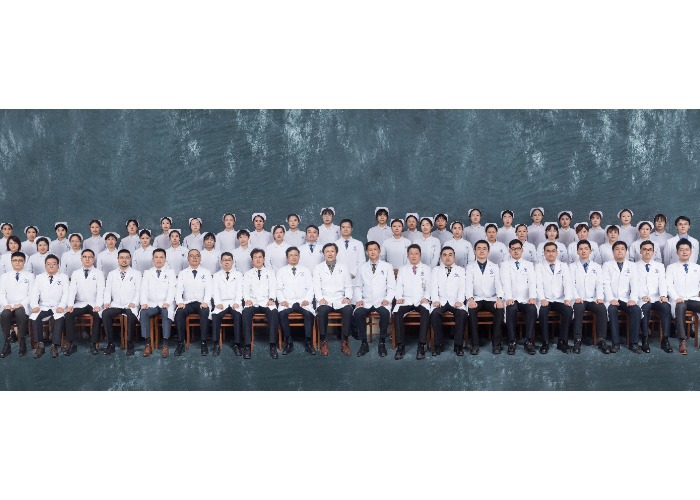
The Department of Thoracic Surgery currently has 5 chief physicians, 6 associate chief physicians, 6 attending physicians, and 6 resident physicians, including 15 doctoral degree holders. Over the past five years, it has obtained a total of 10 scientific research projects of various types (including 4 projects funded by the National Natural Science Foundation of China) and has published more than 40 SCI papers.
Surgical Conditions of the Department
The minimally invasive thoracoscopic rate for routine pulmonary and esophageal surgeries is over 90%.
1) Pulmonary surgery: standard radical surgery for lung cancer, lobectomy; pneumonectomy; segmentectomy; bronchial and pulmonary artery sleeve resection with lobectomy; lung volume reduction surgery, bullectomy, pleurodesis; resection of benign lung tumors; pneumonectomy for pulmonary tuberculosis and bronchiectasis, lung transplantation, etc.
2) Tracheal surgery: tracheal tumor resection, carinal resection and reconstruction, second carinal reconstruction.
3) Esophageal surgery: multidisciplinary comprehensive treatment for locally advanced esophageal cancer, radical surgery for esophageal cancer and cardia cancer, esophagogastric anastomosis; esophagectomy with colonic interposition for esophageal replacement; surgery for cervical esophageal cancer and high intrathoracic esophageal cancer, reoperation for esophageal anastomotic stenosis; Heller's myotomy; enucleation of esophageal leiomyoma; anti-reflux surgery for the esophagus; repair of esophageal rupture; diverticulectomy of the esophagus, etc.
4) Surgery for diaphragmatic and mediastinal diseases: repair of traumatic diaphragmatic hernia, repair of hiatal hernia, resection of giant mediastinal tumors, thymoma resection, extended thymectomy for myasthenia gravis, etc.
5) Surgery for chest wall and pleural cavity diseases: resection of benign chest wall tumors; resection of malignant chest wall tumors with chest wall repair and reconstruction; correction of pectus excavatum; decortication for empyema; fibrotic pleurectomy for chronic empyema; resection of pleural mesothelioma, etc. Thoracic duct ligation; sympathectomy for palmar hyperhidrosis.
6) Mediastinoscopy: biopsy of mediastinal tumors and lymph nodes.
Clinical Diagnosis and Treatment Characteristics:
1) Universalization of minimally invasive techniques
The proportion of radical resection for lung cancer, esophageal cancer, and mediastinal tumors under thoracoscopy has exceeded 90% of the total surgical volume, and most are uniportal thoracoscopic surgeries. Lung cancer surgeries include lobectomy, sleeve lobectomy, double sleeve resection, and segmentectomy; esophageal cancer surgeries include thoracoscopic-laparoscopic combined esophagectomy + gastric (or colonic) esophageal replacement with intrathoracic (or cervical) anastomosis; mediastinal tumor surgeries include transthoracic or subxiphoid thoracoscopic extended thymectomy, etc. In recent years, tubeless (non-intubated, spontaneous ventilation-preserving) uniportal thoracoscopic surgery, inflatable mediastinoscopic radical esophagectomy, and microwave and cryoablation for pulmonary nodules have been carried out to further reduce surgical trauma.
2) Standardization of multidisciplinary comprehensive treatment for tumors
Through the application of CT three-dimensional reconstruction, artificial intelligence-assisted diagnosis, percutaneous lung biopsy, mediastinoscopy, electromagnetic navigation bronchoscopy (ENB), endobronchial ultrasound (EBUS), rapid on-site evaluation (ROSE), and other techniques, the diagnostic rate of lung cancer is improved. For early-stage lung cancer, precise evaluation is conducted, individualized treatment plans are formulated, and overtreatment is prevented. Following the latest NCCN guidelines and academic frontiers, a thoracic tumor MDT team has been established to steadily optimize multidisciplinary diagnosis and treatment plans for advanced thoracic tumors (lung cancer, esophageal cancer, thymoma, etc.), and preoperative neoadjuvant chemotherapy, radiotherapy, targeted therapy, immunotherapy, and postoperative adjuvant therapy are widely carried out.
3) Routinization of highly difficult surgeries
Various types of carinal (or second carinal) resection + reconstruction, double sleeve lobectomy, lung transplantation, resection of tumors with vascular invasion + artificial vascular replacement and bypass grafting, and complex tumors at the cervicothoracic junction are performed. Relying on the strong comprehensive strength of Renji Hospital, surgical treatment is performed for patients with other severe chronic diseases (such as uremia, rheumatic diseases, etc.), and simultaneous combined surgeries are carried out with other departments, such as lung cancer + heart valve replacement, coronary artery bypass grafting, and simultaneous combined surgery for thoracic malignant tumors with other malignant tumors.

 English