Department Details
In October 1958, at the founding of Peking University Third Hospital, the Department of Traditional Chinese Medicine and Acupuncture was established. Director Lü Bohua served as the first department head. Subsequently, under the optimized management of successive directors including Mao Xiaosan, Li Hongxiang, Lu Guoxun, Nie Youzhi, and the current director Li Dong, the department has gradually grown and expanded from 6 physicians at its inception to the current 34. The department currently consists of two divisions: the main hospital and the airport campus. In October 2019, a TCM ward was established at the airport campus with 15 beds. The department currently has 5 chief physicians, 4 associate chief physicians, 13 attending physicians, and 12 resident physicians. Among the staff, 2 hold postdoctoral degrees, 17 hold doctoral degrees, and 10 hold master's degrees. The daily outpatient volume ranges from 700 to 760 visits, with an annual outpatient volume exceeding 270,000 visits. In 2011, the department was designated as a Model TCM Department of General Hospitals in the Beijing region; in 2015, it became a National Model TCM Department Construction Unit in General Hospitals.
TCM Group: By strengthening the development of specialized TCM disease clinics, the department highlights the role of traditional Chinese medicine in advantageous diseases and key treatment stages. After more than sixty years of development, specialized clinics have been established for TCM-assisted reproductive technology intervention, infertility, menstrual disorders, thyroid diseases, breast diseases, chronic gastritis, rheumatoid arthritis, tumors, chronic obstructive pulmonary disease, TCM emotional management, TCM cosmetology, and chronic disease management.
Acupuncture Group: The acupuncture group is a diagnostic and therapeutic team that integrates acupuncture and meridian theory with modern photoelectric and physical diagnostic technologies. After decades of development, comprehensive therapeutic measures have been adopted to treat cervical spondylosis, lumbar diseases, joint pain, post-stroke sequelae, facial paralysis, trigeminal neuralgia, headache, hiccups, tinnitus, obesity, and enuresis, achieving favorable outcomes, with specialized disease clinics established.
Research Achievements
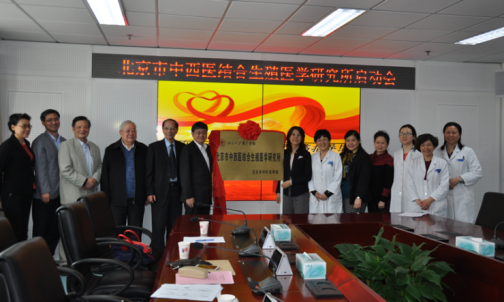
In 2010, the Capital Health Development Research Project "Randomized Controlled Clinical Study on the Integration of Traditional Chinese Medicine and Acupuncture into Assisted Reproductive Technology to Improve Pregnancy Rates," led by Director Li Dong, was the department's first provincial and ministerial-level research project. In the same year, Chief Physician Shi Chenghe published the department's first SCI paper. In recent years, breakthroughs in both quantity and quality have been achieved in research projects and publications. From 2015 to early 2020, the department led 4 projects funded by the National Natural Science Foundation of China, 1 project funded by the Beijing Natural Science Foundation, 1 Capital Clinical Characteristics Special Fund project, 1 Capital Health Development Research Project, 1 Science and Technology Enhancement Project of the Beijing Administration of Traditional Chinese Medicine, 1 Peking University Medicine-Information Science Joint Research Seed Fund project, and 1 Capital Socioeconomic Development Research Institute Fund project. More than 60 papers have been published in statistical-source journals and over 10 SCI papers. In 2013, the Beijing Institute of Integrated Traditional Chinese and Western Medicine Reproductive Medicine was established, marking the first municipal-level research platform involving the department's participation. One faculty member serves as Deputy Director of the Beijing Institute of Integrated Traditional Chinese and Western Medicine Reproductive Medicine and Deputy Director of the Department of Integrated Traditional Chinese and Western Medicine at Peking University Health Science Center; 3 faculty members hold 7 positions as deputy chairpersons of national and Beijing municipal-level societies; 3 faculty members hold 8 positions as standing committee members or council members; and 11 faculty members hold over 30 positions as committee members or council members. Research work has advanced by leaps and bounds.
Teaching and Health Education
In terms of teaching, the department undertakes TCM theory instruction, clinical preceptorship, standardized residency training, and continuing education for visiting scholars from other institutions, serving nursing students and 8-year clinical medicine students of Peking University Health Science Center. Since 2007, the department has deepened TCM teaching reform for 8-year medical students, developed teaching syllabi, and established a multi-dimensional TCM teaching model and multi-station examination model, strengthening medical students' understanding of and interest in TCM theory and promoting the cultivation of integrated traditional Chinese and Western medicine talents. Multiple faculty members have received awards as outstanding teachers from Peking University Health Science Center and Peking University Third Hospital.
Meanwhile, the department possesses strong international teaching capabilities, having provided training to more than 800 visiting scholars and international students from countries including the United States, Germany, Japan, Spain, and Brazil. Since 1997, the department has established cooperation with the Huangdi Acupuncture Association in Seville, Spain, with regular exchange activities held. Health education is also one of the department's key priorities, playing an important role in enhancing public awareness of TCM health concepts. Through campus visits and community outreach, multiple health consultation and free clinic activities are held annually. From 2010 to 2019, over 110 person-times have provided TCM diagnostic and therapeutic services at the grassroots level, treating more than 7,000 patients free of charge. Additionally, relying on the "Capital TCM Disease Prevention Health Promotion Project" and the "Beijing TCM Health Village/Community Construction" project, health education has been delivered through both online and offline channels, benefiting over 12,000 individuals.
Specialized Group Development
1. TCM-Integrated Assisted Reproductive Technology: Our hospital's assisted reproductive technology holds a leading position domestically. Through years of clinical and scientific observation, adjunctive use of traditional Chinese medicine and acupuncture before and after assisted reproduction can improve success rates, and a distinctive TCM diagnostic and therapeutic system has been developed. Centered on Director Li Dong, a clinical and research innovation team for TCM-assisted reproduction has been established, achieving notable results with multiple research grants and publications. Building on this foundation, the Beijing Institute of Integrated Traditional Chinese and Western Medicine Reproductive Medicine was established in April 2015 to conduct diagnosis, treatment, and research on complex reproductive endocrine diseases using integrated approaches.
2. Chronic Atrophic Gastritis: Chronic atrophic gastritis is a common and frequently occurring disease, often triggered by irregular diet and emotional dysregulation. Through TCM syndrome differentiation, herbal treatment can significantly improve patient symptoms and prognosis. Concurrently, leveraging the advanced diagnostic capabilities of our hospital's nationally key clinical department—the Gastroenterology Department—treatment outcomes are evaluated, further enhancing the level of TCM diagnosis and treatment.
3. TCM Treatment of Dermatological Diseases: Traditional Chinese medicine holds that "whatever manifests internally will inevitably show externally." Therefore, skin diseases represent external manifestations of internal organ and qi-blood dysfunction or pathogenic invasion. In treatment, we employ internal therapy, external therapy, or combined internal-external approaches, applying flexible treatment strategies tailored to different dermatological conditions to achieve favorable clinical outcomes.
4. Combined Acupuncture and Herbal Therapy for Neck, Shoulder, Back, and Leg Pain: Leveraging the advantages of our hospital's nationally key disciplines—Orthopedics and Sports Medicine—the department has established a specialized treatment team for neck, shoulder, back, and leg pain that does not require surgery, such as lumbar disc herniation, cervical spondylosis, arthritis, frozen shoulder, tennis elbow, and sports injuries. This has evolved into a Neck-Shoulder-Back-Leg Pain Treatment Center, developing distinctive therapeutic approaches.
5. TCM Cosmetology: The TCM cosmetology specialty has been continuously developing, offering herbal mask therapy for acne and facial pigmentation, and acupoint minimally invasive catgut embedding for obesity. This has evolved into a novel technique that improves assisted reproductive success in obese patients with polycystic ovary syndrome, and has received hospital approval as a new clinical technique.
6. TCM Emotional Management: Applying the TCM holistic view of heaven and humanity, the theories of essence-qi-spirit, and yin-yang and five phases, and based on the TCM theories of visceral-emotional correspondence, emotional qi transformation, and drug ascending-descending-floating-sinking properties, combined with contemporary social psychology and humanistic medicine research findings, the department examines patients' social roles. At the operational level, narrative medicine content is integrated, using TCM cultural guidance and herbal medicine to regulate patients' behavior and psychology. Throughout the treatment process, medical empathy is fully utilized to achieve comprehensive management of the patient's overall condition and enhance clinical efficacy.

 English