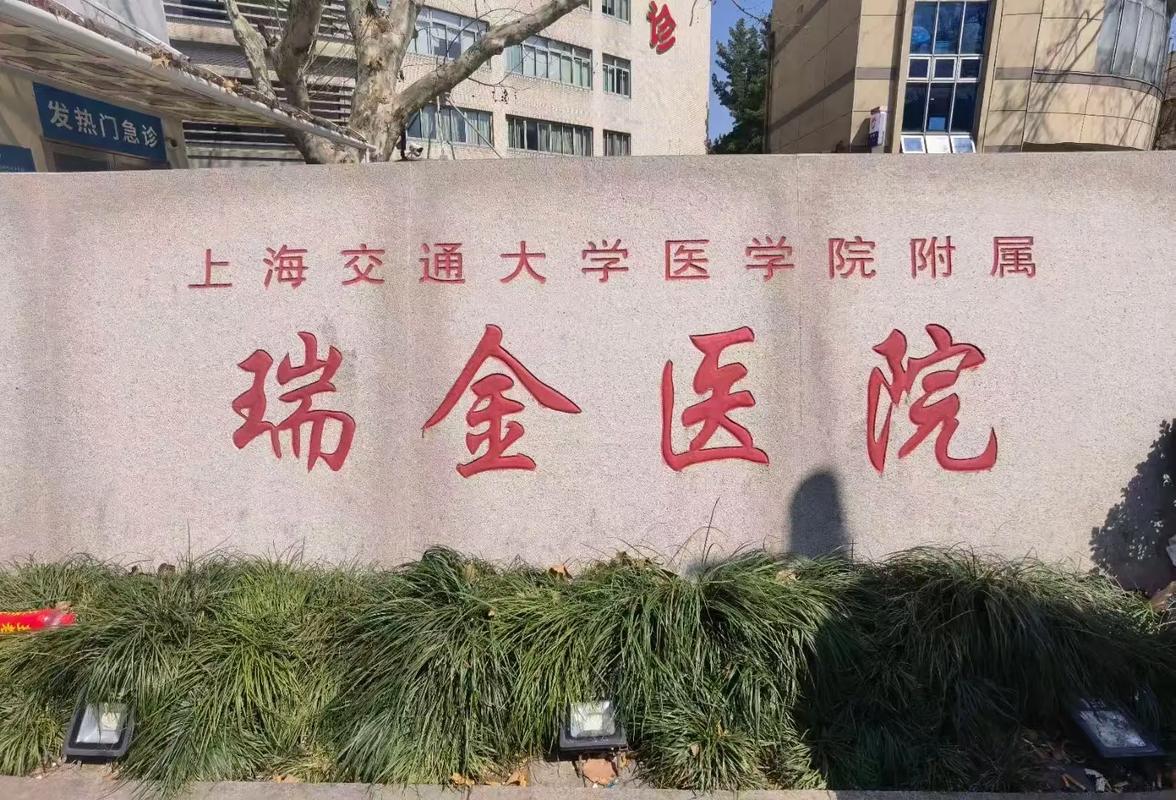
Founded in 1907, Ruijin Hospital, formerly known as Guangci Hospital, is a large tertiary comprehensive teaching hospital. In recent years, the hospital has actively explored the path of high-quality development of public hospitals. It is among the first batch of national pilot hospitals for high-quality development of public hospitals, pilot hospitals for modern hospital management systems, and national emergency medical rescue bases; it was selected into the first batch of projects (mentoring category) of the National Medical Center (comprehensive category), and Ruijin Hainan Hospital has become a national regional medical center; it was selected into the national pilot construction project of "flagship" hospitals for integrated Chinese and Western medicine, among others. The hospital has received the A++ rating in the national public hospital performance assessment for six consecutive years and has been rated as a "National Civilized Unit" for seven consecutive sessions.
The hospital currently has more than 50 clinical business departments and clinical centers, 4 national key disciplines, 27 national key clinical specialties, and 2 national clinical specialty quality control centers. It possesses the National Major Science and Technology Infrastructure for Translational Medicine (Shanghai), the State Key Laboratory of Omics and Diseases, the National Clinical Medical Research Center for Metabolic Diseases, as well as 10 provincial and ministerial key laboratories, 35 national drug clinical trial specialties, etc. It also has research institutions such as the Innovation Center, the Whole Life Cycle Health Management Center, the Brain Disease Center, the Institute of Advanced Medical Imaging Technology, the Institute of Medical Chips, the Clinical Research Center, and the Institute of Medical Robots.
The hospital has a large group of medical experts with high reputations both at home and abroad, including Academicians of the Chinese Academy of Sciences Chen Zhu and Chen Guoqiang, Academicians of the Chinese Academy of Engineering Wang Zhenyi, Chen Saijuan, and Ning Guang, Foreign Academician of the Chinese Academy of Engineering Eric GILSON, and Lasker Award winner Professor Michael Shepard. Among them, Academician Wang Zhenyi was awarded the nation's highest honor, the "Medal of the Republic," and received the State Preeminent Science and Technology Award.
The hospital takes safeguarding people's lives and health as its mission and constantly challenges technical forbidden zones to conquer difficult and critical diseases. In the 1950s, it successfully treated steelworker Qiu Caikang, who suffered severe burns over 89.3% of his body, breaking the then international conclusion that "burns covering more than 80% of total body surface area are incurable" and gaining fame at home and abroad. In 1957, it diagnosed the first domestic case of primary aldosteronism, laying the foundation for endocrinology and metabolic diseases in China. In the 1970s, it completed the first domestic allogeneic heart transplantation and the first domestic allogeneic liver transplantation. In the 1990s, major progress was made in the molecular biology research and clinical treatment of leukemia, and the "Shanghai Protocol" for the treatment of acute promyelocytic leukemia became an internationally recognized standard treatment. In the new era, facing the new demands of the people for life and health and focusing on the frontiers of medicine, after years of effort, the first domestic proton therapy system was officially approved for marketing.
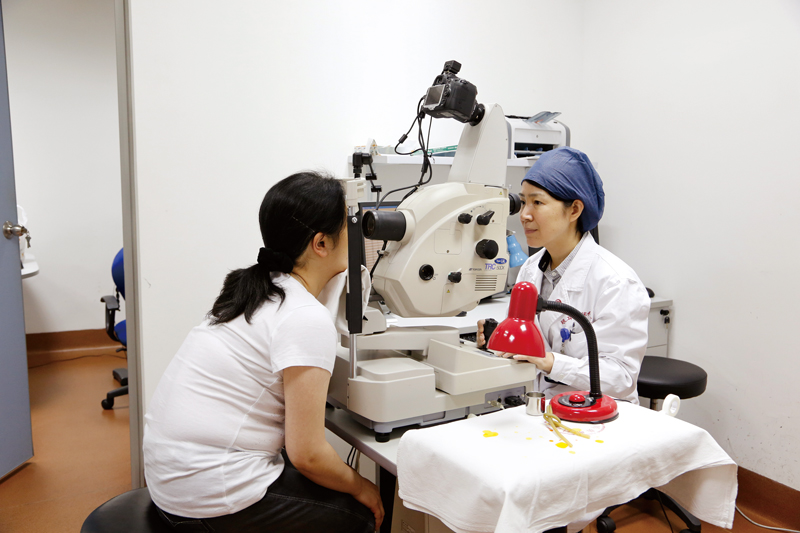
Relying on information platforms, the hospital continuously improves the patient experience. It hosts the Shanghai Digital Medicine Innovation Center and has pioneered a series of convenient medical service application scenarios; it has been approved for Shanghai's "Future Hospital" project. At the same time, the hospital was the earliest in China to be equipped with top-tier equipment such as PET-MR, the sixth-generation head gamma knife, the fourth-generation da Vinci surgical robot system, the intraoperative radiotherapy system, and small-animal PET-CT. It also has a large number of sophisticated instruments, including PET-CT, spiral tomotherapy (TOMO), proton radiotherapy system, and magnetic resonance imaging (MRI 3.0T), with medical equipment reaching international advanced levels.
With the construction of a large education system as its core, the hospital makes every effort to promote the connection and integration of college education with post-graduation standardized residency training and specialty training, continuously strengthening the two major brands of medical French teaching and medical simulation teaching, and jointly promoting the improvement of medical talent training quality. The hospital is among the first batch of "National Clinical Teaching and Training Demonstration Centers"; the "Progressive, Integrated, Immersive Ruijin Clinical Practice Teaching Innovation Model" won the first prize of Shanghai Teaching Achievement Awards.
With comprehensively strengthening Party leadership as the foundation, the hospital consistently adheres to Party building as the guide. With the "Guangci" brand building and the "Employee Care Plan" as leverage, it strengthens the orientation toward patient needs, cares for medical staff, consolidates the spiritual core supporting the hospital's high-quality development, and builds a new culture of high-quality development. It adheres to the "BE-QUIET" development strategy of brand building, progress and reform, quality system, organic whole, intellectual wisdom, efficiency improvement, and technology supremacy, and vigorously explores and practices the modern hospital development path of "integrated operation, vertical management, and homogeneous medical care" for a single institution with multiple campuses.
Inheriting 118 years of history, Ruijin Hospital will continue to uphold the general tone of "toward goodness, toward progress, toward development," the value concept of "trusted by patients, proud of employees, satisfied by society, respected by peers," the purpose and mission of "broad benevolence and compassion, pursuit of excellence," and fulfill the responsibility of "people first, life first." It will strive to build Ruijin Hospital into a creator and source of global new medical technologies, a national demonstration site for whole life cycle health services, a Shanghai site for public health emergency response and disaster rescue, and a training site for medical and health practitioners urgently needed by society, and forge ahead toward the goal of building a future-oriented "Asia-first-class demonstrative hospital." (Data as of February 2026)
Address:



 العربية