تفاصيل القسم
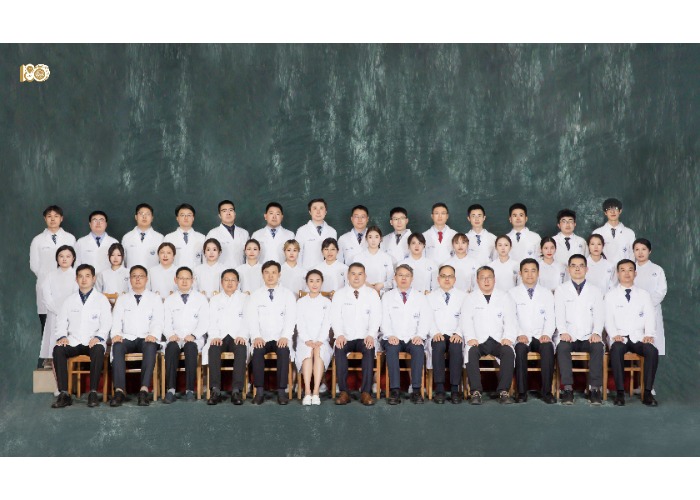
The Department of Spine Surgery at Renji Hospital, Shanghai Jiao Tong University School of Medicine, was officially established in January 2017, becoming the first among Shanghai's tertiary hospitals to independently set up a spine surgery outpatient clinic and emergency service. It has now developed three major specialties and key research directions: cervical spine surgery, spinal deformity, and minimally invasive spine surgery, with each subspecialty group led by one chief physician and two associate chief physicians. The ward has 48 open beds, and the department currently has 19 physicians, including 11 with senior professional titles, 2 doctoral supervisors, and 4 master's supervisors. The Department of Spine Surgery has always adhered to the core concept of protecting patients' spinal cord and nerve function, emphasizing the synchronized development of clinical research and basic research, coordinating individual development with team building, and integrating disciplinary development with talent cultivation, service to the people, and translational research.
The cervical spine surgery subspecialty group focuses on the most common degenerative cervical spine diseases and cervical spine trauma, while continuously expanding the early diagnosis and precision treatment of upper cervical spine conditions, cervical spine deformities, and cervical spine tumors. It performs anterior cervical discectomy and fusion (ACDF), cervical disc replacement (ACDR), motion-preserving posterior cervical laminoplasty, laminectomy with fixation and fusion, and personalized hybrid surgeries. It has accumulated rich clinical experience particularly in complex and difficult cases such as extremely severe cervical spondylotic myelopathy in elderly patients, cervical spine deformities, and revision surgery for recurrent cervical spine conditions. "Technological Innovation and System Optimization in the Diagnosis and Treatment of Cervical Spine Injuries" was awarded the First Prize for Scientific and Technological Progress by the Ministry of Education in 2018. The department regularly holds the national-level continuing medical education course "New Theories and Techniques in Cervical Spine Decompression and Reconstruction" annually. The discipline leader, Professor Shen Hongxing, serves as the President-elect of the Asia-Pacific Cervical Spine Research Society (CSRS-AP) and hosted its first annual meeting held offline in China. The spinal deformity subspecialty group focuses on congenital scoliosis, adolescent idiopathic scoliosis, and adult degenerative scoliosis. It is proficient in complex three-column osteotomy and correction procedures such as pedicle subtraction osteotomy (PSO) and vertebral column resection (VCR), and was among the earliest in China to apply neuroelectrophysiological monitoring technology to improve surgical safety. The minimally invasive spine surgery subspecialty group addresses the younger age trend of disc diseases and the spinal challenges of an aging society. It is proficient in minimally invasive transforaminal endoscopic cervical/lumbar laminectomy and discectomy, performing nearly one thousand minimally invasive percutaneous vertebroplasty (PVP) procedures under local anesthesia annually. It actively carries out new techniques such as unilateral biportal endoscopic (UBE) surgery and navigated percutaneous pedicle screw fixation, which have significant clinical advantages including minimal surgical trauma and rapid patient recovery. While achieving good outcomes, it has accumulated rich experience in minimally invasive treatment. Currently, the department performs over 2,000 surgeries annually, with its discectomy volume ranking among the top three in the city according to Shenkang rankings. The department keeps pace with the era of artificial intelligence ushered in by the fourth technological revolution. In 2018, it was the first in East China to introduce orthopedic robots and established a clinical technology application center for robot-assisted spine surgery. To date, it has completed nearly one thousand robot-assisted spine surgeries and was awarded the "Top Ten Clinical Application Teams" by the Orthopedic Surgical Robot Application Center of the Ministry of Industry and Information Technology and the National Health Commission in 2019. It was the first in China to achieve the simplification of complex surgeries, the safety of highly difficult surgeries, and the minimally invasive nature of routine surgeries.
Since the establishment of the department, colleagues throughout the department have worked diligently over seven years, obtaining a total of 16 National Natural Science Foundation of China grants and 17 provincial and ministerial-level projects from the Shanghai Municipal Science and Technology Commission, Health Commission, and others, with research funding exceeding 10 million yuan. Over 100 SCI papers have been published cumulatively, including in authoritative professional journals such as Advanced Science, Advanced Materials, Spine, Global Spine Journal, and European Spine Journal. The department has cultivated a group of young and middle-aged backbone physicians who "can perform surgery in the operating room and conduct research in the laboratory," who have successively received talent programs including Shanghai Leading Talent, U35 Outstanding Young Talent, Outstanding Academic Leader, Pujiang Talent, Science and Technology Rising Star, and Health Commission Outstanding Young Talent. Department Director Professor Shen Hongxing serves as Vice Chairman of the Shanghai Orthopedic Branch, Vice President of the Medical Robot Special Committee of the Shanghai Medical Doctor Association, Vice Chairman of the Orthopedic Professional Committee of the Medical Robot Physicians Branch of the Chinese Medical Doctor Association, and President-elect of the Asia-Pacific Cervical Spine Research Society (CSRS-AP). The department has become the Vice Chairman and Secretary-General unit of the Spine Surgery Professional Committee of the Chinese Section of the International Society of Orthopaedic Surgery and Traumatology (SICOT).
"The strong pass is like iron, yet now we stride forward from the beginning." The Department of Spine Surgery at Renji Hospital, backed by the orthopedic family established in 1939, is full of vitality and high morale. All colleagues will focus on clinical practice, be good at thinking, dare to innovate, and brave to break through, continuing to delve into new technologies in the new era of artificial intelligence. In the fields of cervical spine surgery, spinal deformity, and minimally invasive spine surgery, we will further forge ahead and overcome difficulties, rooted in Pudong, leading Shanghai, radiating across the Yangtze River Delta, and reaching the whole country, benefiting the vast number of patients with spinal diseases with exquisite technology and high-quality service.

 العربية