Department Details
The Department of Radiation Oncology at Peking University International Hospital is one of the core departments of the Cancer Center of Peking University International Hospital. Relying on Peking University Health Science Center, with a rigorous, pragmatic, and innovative work attitude, we continuously absorb advanced concepts and experience from both domestic and international sources in our work. By optimizing workflow processes, we wholeheartedly serve patients. As a comprehensively developed integrated cancer treatment center and clinical research and teaching base, it is one of the four major medical centers prioritized for development at Peking University International Hospital.
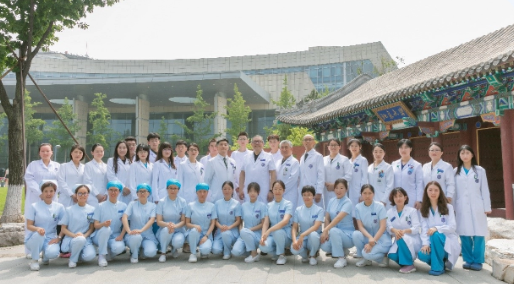
The Department of Radiation Oncology has over sixty medical, nursing, and technical staff, with a well-structured talent hierarchy and strong technical capabilities. Among them, there are 11 radiation oncologists, all holding master's degrees or above, including 1 postdoctoral fellow, 4 doctoral degree holders, and 6 master's degree holders; 1 chief physician, 3 associate chief physicians, 3 attending physicians, and 4 resident physicians. There are 4 medical physicists and 9 radiation therapists (technologists).
The Department of Radiation Oncology has more than 100 beds. The radiotherapy treatment area covers a floor area of 4,300 square meters, with 9 treatment rooms, 3 simulation rooms, and 1 particle surgery room. The department is equipped with a Varian TrueBeam linear accelerator from the United States, an Elekta Synergy linear accelerator from Sweden, a Varian three-dimensional brachytherapy system from the United States, an NRL-003 radiofrequency hyperthermia system, a GE large-bore CT simulator from the United States, a Siemens MRI simulator from Germany, and the world's latest ZAP-X Mars radiosurgery robot. Additionally, a complete set of radiotherapy dosimetry measurement and verification tools is available, including a three-dimensional water phantom, a three-dimensional real-time online dosimetry verification system, accelerator beam verification instruments, and respiratory motion phantoms. A comprehensive and strict quality assurance (QA) and quality control (QC) system has been established, enabling the precise delivery of advanced radiotherapy techniques such as stereotactic body radiation therapy (SBRT), volumetric modulated arc therapy (VMAT), image-guided radiation therapy (IGRT), intensity-modulated radiation therapy (IMRT), and brachytherapy (afterloading and interstitial). Subsequently, the CyberKnife, boron neutron capture therapy (BNCT), and other world-leading radiotherapy equipment will soon be put into clinical use. Quality assurance is the lifeline of the Department of Radiation Oncology. The department has always placed strict quality assurance and quality management as the top priority, establishing a rigorous and systematic quality assurance system with detailed and strict procedures for radiotherapy simulation, treatment planning, dose review, positioning verification, and treatment verification. Daily, weekly, monthly, and annual inspections are maintained for radiotherapy and simulation equipment. Equipment safety, dosimetric accuracy, and mechanical precision have reached internationally advanced levels, ensuring the safety and accuracy of treatment.
In 2025, the Department of Radiation Oncology provided radiotherapy to over 1,300 patients. With the introduction of advanced equipment and the development of new technologies, the department will undoubtedly serve more patients. The Department of Radiation Oncology adheres to a patient-centered approach, dedicating itself to protecting patients' health with exquisite radiotherapy techniques and high-quality services.

 English