تفاصيل القسم
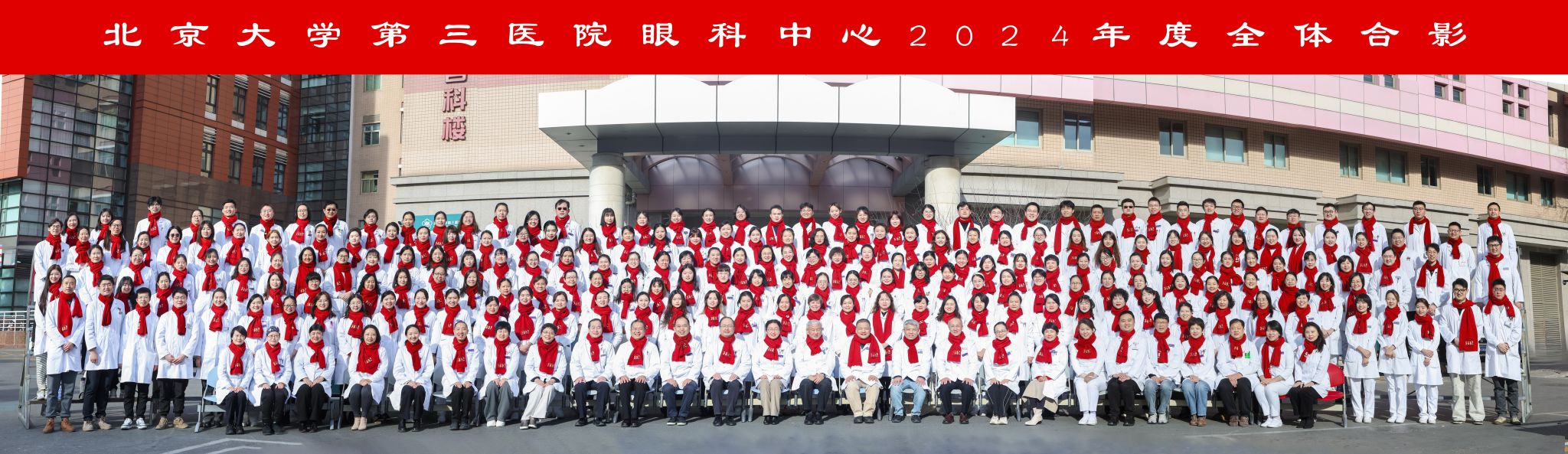
The Department of Ophthalmology at Peking University Third Hospital (PUTH) was founded in 1958 by Professor Li Fengming, a renowned ophthalmologist and ophthalmic pathologist. Building upon the foundation of the PUTH Department of Ophthalmology, the Peking University Eye Center was established in 2001. The ophthalmology building, with a floor area of 10,000 m², integrates clinical care, teaching, and research. It is currently a National Key Discipline, a Beijing Key Laboratory, a National Clinical Pharmacology Trial Institution, a Beijing Standardized Residency Training Base, and a Specialty Physician Standardized Training Base of Peking University Health Science Center. Professor Cao Anmin, formerly a professor at Johns Hopkins University School of Medicine and an internationally renowned ophthalmic pathologist, served as the first director of the Eye Center. He emphasized talent development and team building, establishing subspecialties in accordance with international ophthalmology conventions and recruiting leading ophthalmic experts nationwide to serve as subspecialty directors, forming the core driving force for the rapid development of the Eye Center on an independent innovation platform.
The PUTH Department of Ophthalmology extends its reach across 13 campuses of Peking University Third Hospital, 49 community hospital ophthalmology departments, over 100 medical consortium members, and 38 research consortium members. It ranked 12th in the 2022 China Ophthalmology Specialty Reputation Rankings. Since 2018, it has consistently ranked among the top five in the Beijing Key Specialty Comprehensive Evaluation, securing first place in the 2023–2024 cycle. In 2024, it was designated a "Research-Oriented Discipline" in the National Research-Oriented Hospital Evaluation and Selection. It ranks first in Beijing for Diagnosis-Related Groups (DRG) performance.
The department currently has 42 inpatient beds, 44 examination rooms, and 15 ophthalmic operating rooms. Annual outpatient visits exceed 430,000, with a daily average of 1,500 visits; annual surgical volume exceeds 30,000 procedures, and annual discharged patients exceed 20,000. It has 85 specialized physicians, including 24 chief physicians, 20 associate chief physicians, and 19 attending physicians. The department encompasses subspecialties including Cornea and Ocular Surface Disease, Vitreoretinal Disease, Cataract, Glaucoma, Optometry and Refractive Surgery, Orbital Disease and Oculoplasty, and Strabismus and Pediatric Ophthalmology, making it one of the most comprehensively subspecialized ophthalmic centers among general hospitals in China. Its surgical management of complex vitreoretinal diseases is widely recognized in the field, with innovative surgical treatment for traumatic choroidal avulsion. The department pioneered the novel surgical technique of "autologous Bruch's membrane with retinal pigment epithelium (RPE) cell transplantation" for the treatment of age-related macular degeneration (AMD), achieving the world's first case and gaining international recognition. Corneal endothelial transplantation techniques and surgical volume rank first nationally. In 2022, the department performed the first "artificial endothelial transplantation" in the Asia-Pacific region for corneal endothelial decompensation, offering a promising solution to donor tissue shortage. In 2023, it achieved the first successful injection of human corneal endothelial cells in China for the treatment of bullous keratopathy. The department was also the first in China to initiate optic nerve rehabilitation training programs for glaucoma patients. Its diagnosis and treatment of complex orbital diseases lead the nation. Additionally, it was among the first in China to explore same-day admission and ambulatory surgery models, achieving successful outcomes that have been widely promoted.
The PUTH Department of Ophthalmology is committed to building distinctive medical platforms. It is one of only two eye banks in Beijing with qualified accreditation. Innovative platforms, including specialized diagnostic imaging, clinical laboratory, pathology, genetic testing and counseling, and patient resource centers, support the department's development of distinctive and precision medicine.
The department currently has 8 doctoral supervisors and 16 master's supervisors. Since 2001, it has trained 12 postdoctoral fellows, over 200 doctoral and master's degree students, and more than 300 visiting physicians.
In the 2023 release of the "2022 Chinese Hospital Science and Technology Value Metrics and 2018–2022 Five-Year Cumulative Science and Technology Value Metrics," the department ranked 8th nationally in both. Its affiliated research institute houses laboratories of considerable scale, including molecular genetics and molecular biology laboratories, equipped with the major instruments and technical conditions required for research in the field. Over the past five years, 16 national-level and 19 provincial/ministerial-level projects have been newly initiated, with active research funding exceeding RMB 33 million. A total of 247 SCI-indexed papers have been published, including 9 with impact factors ≥10. Additionally, 59 patents have been newly authorized, with 7 patent transfers completed, amounting to over RMB 11 million in commercialization value.
The PUTH Department of Ophthalmology is dedicated to serving the people and combating blindness through poverty alleviation efforts. Its medical staff have boarded the "Lifeline Express" five times, leaving their footprints in Guangxi, Qinghai, Gansu, Shanxi, Sichuan, Hunan, Liaoning, Xinjiang, Yunnan, Henan, and other provinces and autonomous regions. Targeted poverty alleviation assistance has also been provided in Tibet, Shaanxi, Shanxi, Ningxia, and other regions with elderly populations, remote areas, and revolutionary heritage. Its blindness prevention and treatment efforts have extended even further to overseas regions in Asia and Africa.
The PUTH Department of Ophthalmology is forging ahead with determination, with three generations of professionals working hand in hand, uniting their strengths and advancing with steady strides, continuously pursuing excellence and striving to become an ophthalmic center with international influence.

 العربية