تفاصيل القسم
The Reproductive Medicine Center of Peking University Third Hospital is the birthplace of the first test-tube baby in Mainland China. Integrating clinical care, education, and research, it is the world's largest and most technologically comprehensive reproductive health research center. The center has conducted extensive systematic work in the clinical diagnosis and treatment of reproductive endocrine disorders and infertility, as well as applied basic research. In the past three years, it has handled 1,796,368 outpatient visits and completed 52,472 fresh IVF cycles. As one of the first reproductive medicine clinical training bases in China, it has achieved pioneering milestones, including the birth of the first and second test-tube babies in Mainland China, the first oocyte-donation test-tube baby, the first frozen-thawed embryo test-tube baby, and the world's second and China's first "triple-freezing" test-tube baby.
With strong support from the hospital, the Reproductive Medicine Center has developed through the orderly succession and construction led by pioneers from Professor Zhang Lizhu, known as the "Mother of Test-Tube Babies in China," to Academician Qiao Jie of the Chinese Academy of Engineering. The center has formed a stable and highly innovative research team, with core academic leaders including academicians of the Chinese Academy of Engineering, Changjiang Scholars Distinguished Professors, recipients of the National Science Fund for Distinguished Young Scholars and the Excellent Young Scientists Fund, and principal investigators of major national programs such as the 973 and 863 Plans, the National Science and Technology Support Program, and the National Key Research and Development Program. The team fully leverages collaborative innovation capabilities, integrates high-quality resources and technical strengths, and breaks down disciplinary and field barriers. Focusing on frontier areas of reproductive health, major social and clinical needs, and common technical challenges in disease diagnosis and treatment, it conducts internationally leading, deeply integrated clinical, basic, and translational research. This includes delivering high-quality clinical diagnosis and treatment and etiological research on reproductive health-related diseases, building systems for fertility assessment and safety evaluation, developing new strategies for the prevention of birth defects and genetic diseases, and improving the success rate of complex infertility treatment and reproductive health levels. The center has repeatedly led the formulation of industry standards and clinical guidelines in this field, demonstrating a high level of disciplinary planning and leadership.
Applied research on improving clinical treatment methods is actively conducted. All internationally advanced assisted reproductive technologies have been widely applied at the center, including conventional in vitro fertilization, intracytoplasmic sperm injection, preimplantation genetic diagnosis, assisted hatching, in vitro maturation of oocytes, blastocyst culture, and oocyte cryopreservation. Meanwhile, significant progress has been made in reproductive disorders, pregnancy-related diseases, fetal-origin diseases, fertility preservation, the safety of assisted reproductive technology, and the development of new technologies. These achievements have provided high-quality evidence-based medical evidence for the revision and improvement of clinical diagnosis and treatment strategies, enhancing the level of diagnosis and treatment for female reproductive disorders. The center treats patients referred from across the country for severe ovarian hyperstimulation syndrome, concurrent thromboembolism, and multifetal pregnancy reduction procedures. Patients with complex and refractory conditions, as well as those from other provinces seeking treatment for difficult diseases, account for more than half of all patients, demonstrating a leading domestic and internationally advanced level of diagnosis and treatment for complex and critical reproductive health conditions.
While advancing assisted reproductive technologies, the center actively explores the application of minimally invasive surgery in the diagnosis and treatment of infertility. Hysteroscopic and laparoscopic procedures are used to treat endometriosis, tubal pathologies, intrauterine lesions, and polycystic ovary syndrome. Additionally, addressing fertility issues related to radiotherapy and chemotherapy for malignant tumors and other factors affecting reproduction, the center completed 28,744 fertility-related minimally invasive surgeries in the past three years. Its experience in complex surgeries for heterotopic pregnancy and rare-site pregnancy is original and has been widely disseminated and taught.
Through multidisciplinary collaboration in reproductive medicine, obstetrics, and genetics, the center has established a comprehensive reproductive disease prevention and control network spanning from communities to hospitals across 10 provinces and cities nationwide, targeting diseases affecting female reproductive health. It has built national-level clinical medical platforms, including a national case database of common female reproductive endocrine diseases in communities, a national demonstration base for monitoring the reproductive health status of women of childbearing age, a database of human germ cells and embryonic development, a biobank and information resource platform, a translational research platform for new diagnostic and therapeutic technologies, a clinical evaluation platform, and an evidence-based medicine research platform.
As the leading unit of the National Expert Group on Quality Management of Assisted Reproductive Technology and the Beijing Center for Quality Control and Improvement of Human Assisted Reproductive Technology, the center has established and refined a quality control system for assisted reproductive technology, evaluated its safety, and achieved breakthroughs in preimplantation and prenatal diagnosis of genetic diseases, fetal medicine treatment, early diagnosis of malignant tumors, and comprehensive treatment preserving fertility. It assists in organizing and implementing the review and validation of assisted reproductive technology in Beijing. During the COVID-19 pandemic, the center organized national experts to discuss and formulate prevention and control strategies for the implementation of assisted reproductive technology.
The center has developed non-invasive, precise, and efficient technologies for preconception/preimplantation/prenatal screening and diagnosis, as well as new technologies for early postnatal diagnosis and intervention. Through interdisciplinary collaboration, it has revealed the regulatory mechanisms of cell differentiation and organ formation during human embryonic development. It pioneered the internationally original preimplantation genetic diagnosis method MARSALA, achieving triple diagnosis of "single-gene testing, chromosomal identification, and linkage analysis," and delivered the world's first MALBAC baby. This innovation improves diagnostic accuracy, reduces costs, and has been promoted to more than 50 centers. It has performed embryonic genetic diagnosis for over 200 types of monogenic diseases, achieving internationally leading levels in birth defect prevention and control.
The center has consistently adhered to the distinctive approach of bidirectional translation between clinical practice and scientific research. Building on multiple national and provincial-level research bases, including the National Clinical Research Center for Obstetrics and Gynecology Diseases, the Key Laboratory of Assisted Reproduction of the Ministry of Education, the Beijing Key Laboratory of Reproductive Endocrinology and Assisted Reproductive Technology, and the Beijing International Cooperation Base for Birth Defect Prevention and Control, it has established a national-level innovative research platform integrating strategic planning, basic research, clinical research, clinical translation, complex disease management, talent cultivation, and widespread dissemination. This has laid a solid foundation for scientific breakthroughs and the translation of achievements in obstetric and gynecological diseases. The center has received numerous honors, including three Second Prizes of the National Science and Technology Progress Award, two First Prizes of the Higher Education Science and Technology Progress Award from the Ministry of Education, one First Prize of the Beijing Science and Technology Progress Award, and one First Prize of the Chinese Medical Science and Technology Award. Research findings have been published in top journals in both clinical and basic research fields, including the *New England Journal of Medicine*, *The Lancet*, *Nature*, *Science*, and *Cell*, and have been selected twice for the "Top Ten Scientific Advances in China."
The center's comprehensive disciplinary strength, influence, and reputation have continued to rise. From 2016 to 2021, it ranked first for five consecutive years in the "Science and Technology Evaluation Metrics (STEM) Ranking of Chinese Hospitals" released by the Chinese Academy of Medical Sciences. In 2021, it topped the "Five-Year Total Science and Technology Evaluation Metrics (ASTEM) Ranking" in Obstetrics and Gynecology. It is recognized as the National Clinical Research Center for Obstetrics and Gynecology Diseases (Reproductive Health), an Innovation Team of the Ministry of Education, and an Outstanding Innovation Research Group of the National Natural Science Foundation of China. In 2018, the center's series of research achievements in assisted reproductive technology were selected as the sole representative of clinical technologies improving people's livelihoods for the exhibition "Great Changes — Celebrating the 40th Anniversary of Reform and Opening-Up."
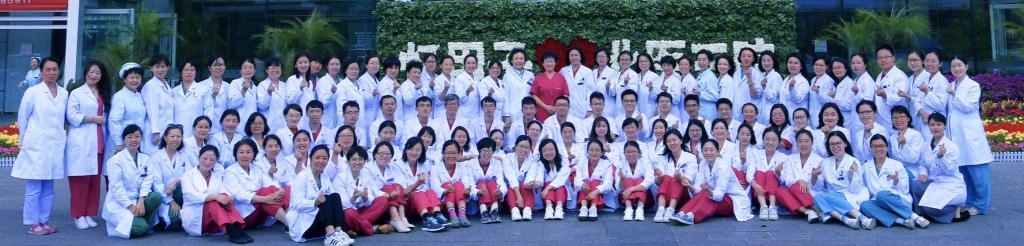
While providing high-quality medical services to patients with a strong sense of responsibility and exceptional medical skills, the team is committed to serving and promoting harmonious social development. It places great emphasis on and actively fulfills its social responsibilities and has been designated a "National Science Education Base." The center provides assistance to underdeveloped regions such as Tibet, Xinjiang, Guangxi, and Ganzhou, helping to train grassroots healthcare personnel and organizing community health consultations and health education activities. At the same time, it places great importance on team quality development and has received honors including the "National Women's Civilization Post" and the "Beijing March 8th Red Banner Collective."
Maternal and child health is a cornerstone of the health of the entire population. Both the 13th Five-Year Plan for National Economic and Social Development and the "Healthy China 2030" Plan outline maternal and infant safety and child health as key priorities. Ensuring maternal and infant safety is the earnest expectation of hundreds of millions of families for a better life in a moderately prosperous society. "Born of love, for love" — care begins at the very start of life. The Reproductive Medicine Center of Peking University Third Hospital has been making unremitting efforts to promote reproductive health and healthy growth. We are committed to disseminating health knowledge, continuously improving reproductive health care services, focusing on infertility diagnosis and treatment, and aiming for healthy offspring to resolve difficulties and bring happiness to countless families. May every life be treated with tenderness, and may every cherished individual be a blessed child. We wish every family's dreams come true!

 العربية